
We recently released an animated explainer video exploring Dolt’s unique architecture and received many questions about our creative process. This blog covers how we brought the video to life, guided by four core questions.
1. Who is the audience, and what do they need to know?#
Making an explainer video is like preparing a presentation. First, identify who is watching. What are their pain points or knowledge gaps? Are they beginners or experts? Defining your audience is essential to shaping relevant content.
For this video, our intended audience was people who had already seen our first video and were curious to learn more about what makes Dolt unique, and to explain how it works for our growing video-preferring, non-reader audience, or TLDRers.
2. What message are you trying to convey?#
Next, clarify the core message. What do viewers need or want to learn? Identify this by listening to industry pain points, reviewing common questions, or gathering team feedback.
The most recent video aimed to provide a clear, visual overview of how Dolt’s storage engine works. The key was delivering complex concepts in an accessible and memorable way.
3. What medium should you use?#
Choose between animation, 2D graphics, terminal walkthroughs, or live action based on your audience and goal. A getting-started guide works well in a terminal format where the viewer can follow along, whereas high-level concepts benefit from more illustrative visual storytelling.
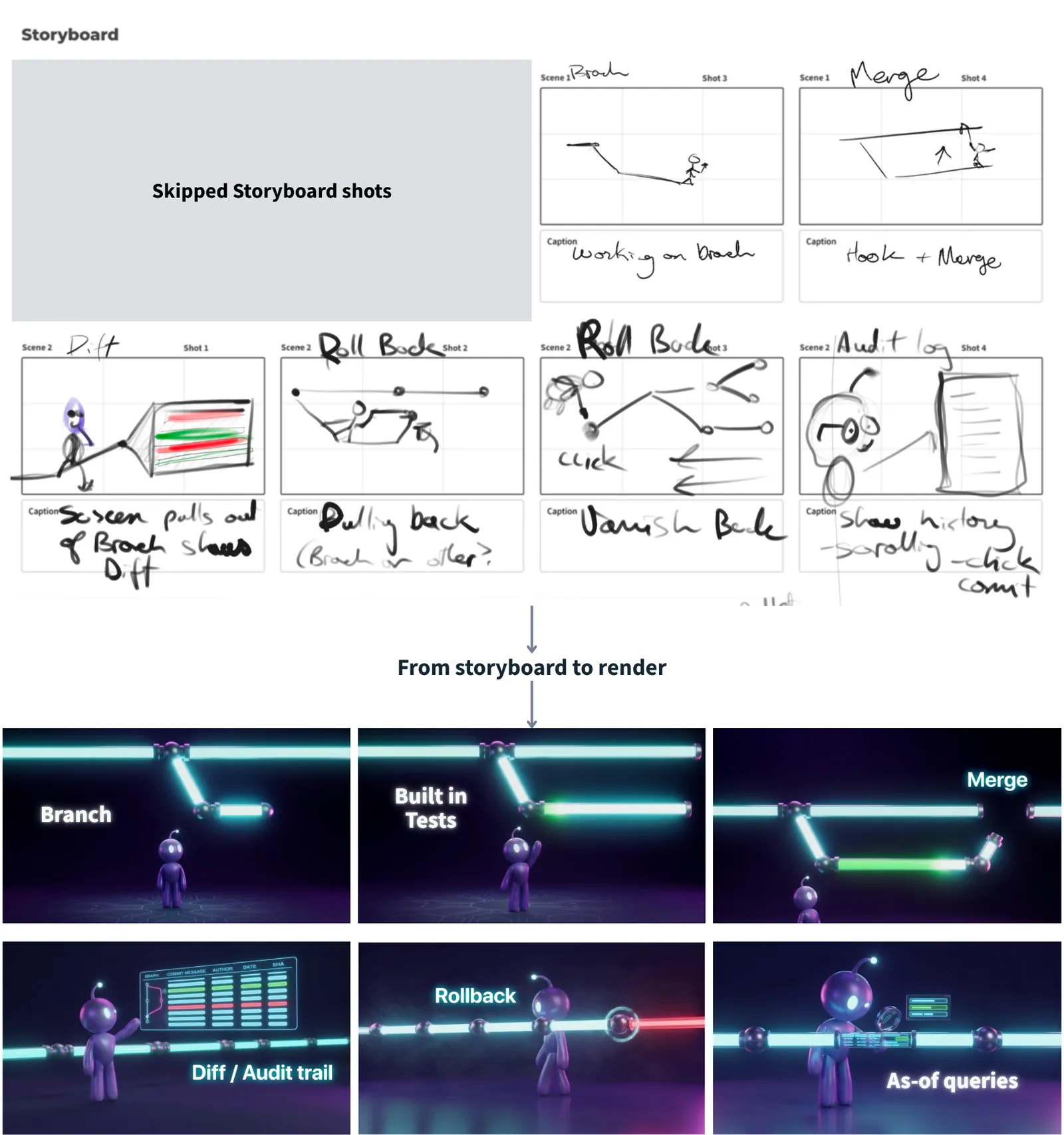
Illustrative visuals help ground abstract ideas. For example, using Dolty to demonstrate Git-style features in a database makes technical features feel tangible and relatable. See below:
Here is an example of what that storyboard to render looked like in an effort to explain Dolt’s Git style functionality:
4. How do you iterate effectively?#
Once you set your audience, goal, and medium, the target is set. You can now shift to continuous refinement. Creating a video involves cycles of prototyping, gathering feedback, and adjusting, from the moment you sketch your first storyboard frame to the minute it’s published.
In this creative space, success relies on your ability to communicate your vision clearly through a storyboard and script to a collaborative team that understands your product or domain. A level of understanding is an important criterion when vetting a creative collaborator. When you and your collaborator are on the same page you can focus on creativity rather than learning and explaining the concepts.
So you get a strong first draft to start with. From there, you can iterate.
The editing process requires strategy, focus, and direction, otherwise you risk spending a long time making changes to things that don’t really matter in the grand scheme of things.
How do you know what to iterate? Well, return to the primary 3 questions you’ve already answered – Who is your audience, what do they need to understand most, and how can you best convey your message?
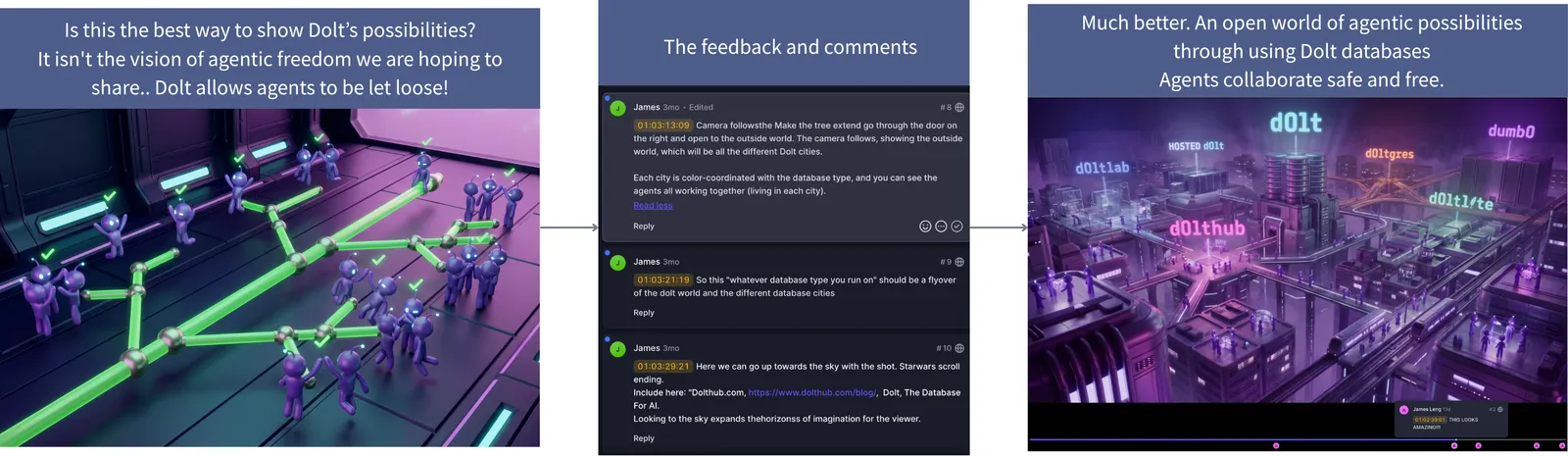
Let’s look at an example of what this looks like. In our ending scene, we wanted to highlight the vast possibilities of agentic collaboration that Dolt databases allow. The initial rendered draft of the scene felt too simple. Agents in a single room, celebrating is cool, but the feeling of freedom doesn’t come across so we went back to the drawing board. In the panel below you can see the progression. Moving from a single room of agents to an expanded city of collaborating agents helped to better communicate the vision of agentic freedom and the world of possibilities that Dolt databases enable.
Did the change land? Let us know!
An important note about this stage of the creative process is that iteration takes and deserves time. Time to come up with ideas, time to bring them to life, time to get feedback, and time to repeat that cycle for every scene. For us, this three-minute video took around four months of collaboration to make sure it hit all the marks. Examples like the one above happened in every scene. Don’t rush your creative exploration, and keep seeking out feedback. You’ll get the feeling that something is right when many people are getting the same vibe, which you can only judge by sharing.
Summary#
To sum it up, keep these core principles in mind when creating your explainer video:
- Know your audience and maintain a clear understanding of what they need to learn.
- Define a clear, focused core message.
- Select the visual medium that best tells your story.
- Iterate continuously with your audience’s perspective in mind.
Happy creating!
Note: The videos referenced in this blog were made without AI assistance.