
Everyone loves to hate on GitHub these days. Microsoft acquired it and ruined the open source vibes. Plus, it’s now down all the time.
Counter: GitHub is the biggest opportunity Microsoft has in the agentic era. It would be worth $1T like Anthropic and OpenAI if it were still private.
Let me explain.
GitHub is Down#
GitHub has had a rough six months. According to my research, during that time, there have been 39 major GitHub outages, many of these affecting core pull request and Actions functionality.
Why? Scale. Coding agents drive a 10-100x increase in almost all Git functions. Issues. PRs. Actions. A previously human endeavor has become automated. Imagine trying to scale an already massive web-scale service 10-100x in six months. I’m sure some of this stems from newly uncovered software bottlenecks, but some of it might also be not enough physical infrastructure capacity. There are only so many computers in Microsoft’s arsenal.
I don’t see an engineering failure; I see the growth of a generational company. Claude was unreliable for a spell, seemingly due to growth as well, and no one talks about that.
Competitors smell blood in the water. Cursor launched a Git hosting service called Origin. Cool name. Two GitHub founders, Thomas Dohmke and Scott Chacon, came out of retirement to start Git-for-agents companies, Entire and GitButler respectively.
GitHub is down indeed. I’m not counting them out.
The Three Pillars of Agentic AI#
My case for GitHub $1T starts with my three pillars of agentic AI: a capable model, version control, and tests. Agents need all three.
This may have been controversial when I wrote it almost a year ago. Now, it’s so obvious it’s boring. You probably hear the same three pillars described in different words: sandboxes, traces, provenance, guardrails. Sandboxes are clones, branches, or worktrees. Traces are diff and log. Provenance is diff and log combined with the cryptographic proof content-addressing provides. Guardrails are tests. Agents need version control and tests. Call it sandboxes and guardrails if you like.
We have two labs building capable models threatening to IPO at over $1T. Who is going to prosper from version control and tests?
A Capable Model#
OpenAI and Anthropic, the aforementioned labs, are rumored to both IPO this year at over a $1T valuation.
I now have $100/month Max plan subscriptions to Claude, Codex, and Grok, $300/month total. The coding agent I prefer has flipped from Claude to Codex over the past couple model releases. There seems to be no durable advantage. I have three terminals open as I type this. And that’s ignoring open models that can be run more cheaply or maybe even locally. There’s a lot of competition and uncertainty in this space.
The defining technology of our time might just be a highly competitive, low-margin, commodity business. Paging Andy Jassy. Great for consumers but not so great for the labs. Grab your retail exit liquidity quick!
Version Control#
I think we can all agree Git combined with GitHub is the world leader in version control. GitHub popularized the Git-style decentralized version control model we all know and love/hate today.
But there is some heavy competition. As I said, even the GitHub founders got back in the game. GitHub is not just version control. It’s the social network for software engineers. If you guys were the inventors of GitHub, you’d have invented GitHub. The durable moat here is the network effects of GitHub. Am I ever leaving my 24k stars? Hell no. That’s my social proof that we built something cool.
GitHub is well positioned to maintain a tight grip on its version control lead.
Tests#
Who is the world leader in tests? There’s no real consensus on local testing frameworks. Testing frameworks are language-specific. Is there an opportunity to develop more agent-friendly local testing frameworks? I think so, especially for domains outside of code.
But continuous integration testing has a leader. The leader is also GitHub. The second GitHub Actions came out, we couldn’t wait to drag Jenkins’s body out of our stack. Now, you do your continuous integration (CI) testing on GitHub Actions. It’s the consensus. Deep Git integration. Multi-platform. Clean build and run every time. It’s kind of perfect. The downside of GitHub Actions was that it was kind of hard to set up. But agents are now awesome at that. A week of engineer fiddling has been reduced to a prompt and a pull request. It works almost every time.
Would I move my CI to a cheaper competitor? Why? It is inexorably tied to my code. I would even pay a slight premium to keep it on the same platform as my code. I want users to see how well-tested my project is. Again, network effects are at play.
Moreover, CI testing via GitHub Actions is essential to agentic engineering. The write-only code model requires clean-room, multi-platform testing. Even the most careful agent has a hard time getting through a robust CI process the first time. CI is the best way to prevent agent mistakes. In my agentic engineering project, DoltLite, every quality breakthrough I’ve achieved was test-driven, enforced by GitHub Actions. As agentic engineering grows as a mode of software engineering, GitHub Actions usage will follow.
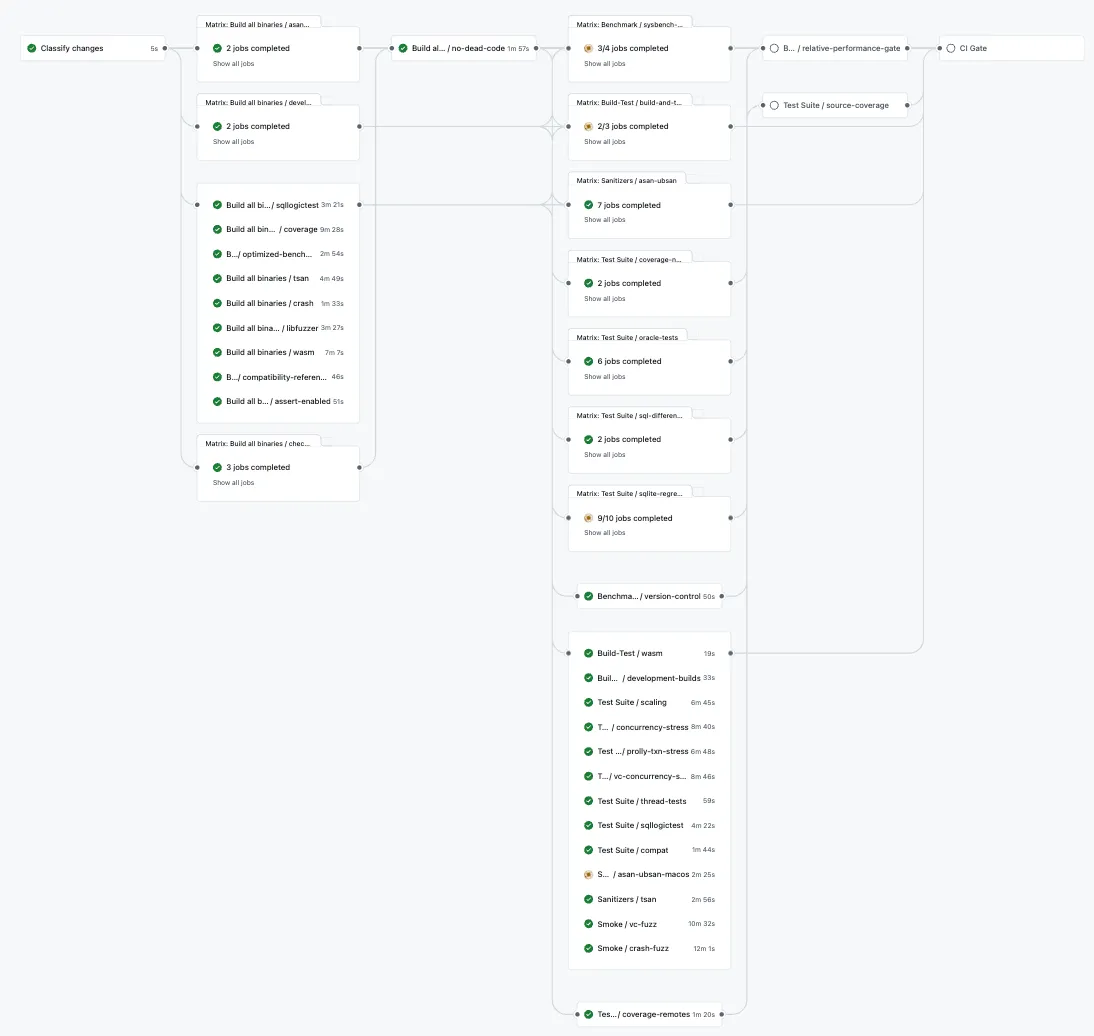
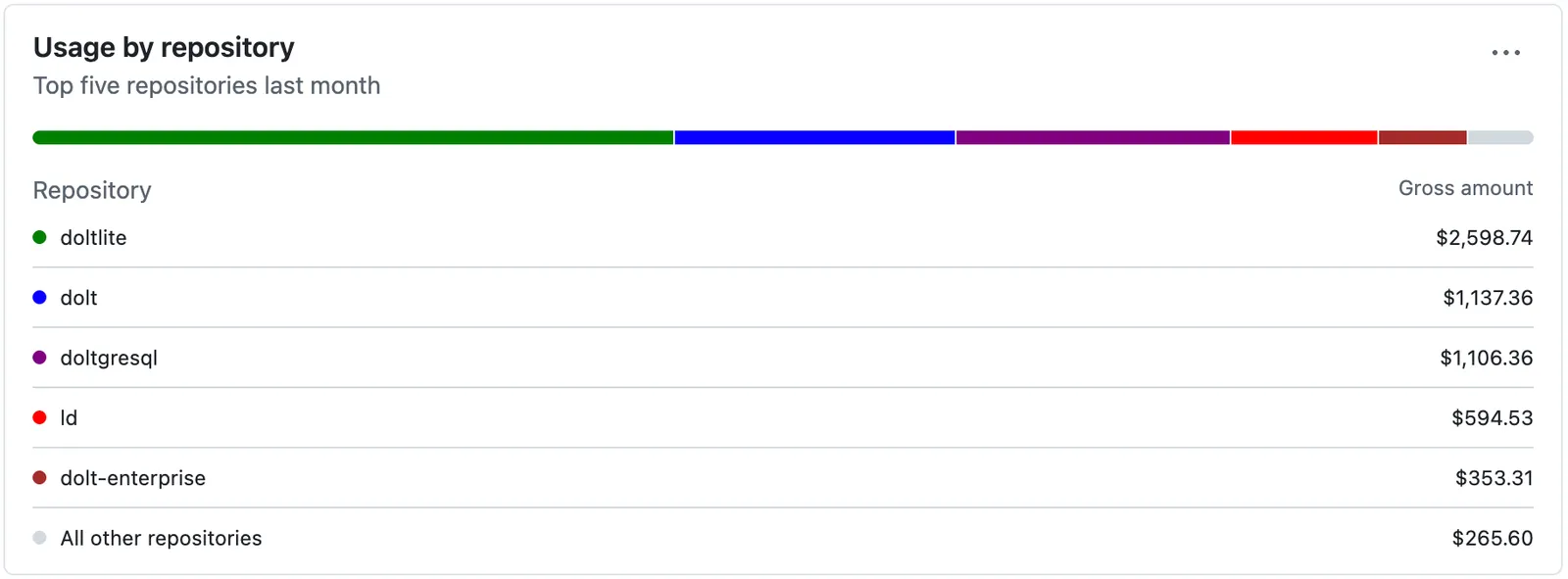
What about revenue opportunity? GitHub Actions revenue is big and durable. Last month, with three $100/month model subscriptions, I generated $2,500 in GitHub Actions spend building DoltLite. GitHub kindly gives me those GitHub Actions minutes for free since DoltLite is open source, but I did have to spend $1,000 to free up runners for my closed-source projects as a result. I’m also pretty certain Anthropic, OpenAI, and SpaceX spent more on compute than GitHub did to service the usage. Those GPUs are expensive. Testing seems like a pretty good business to me.
This isn’t just code#
Over the next few years, the big challenge facing everyone interested in agents is to bring the success of agentic coding to the rest of the enterprise. Agents for accounting. Agents for legal. Agents for go-to-market.
As mentioned in the opening, GitHub is owned by Microsoft. This is a major advantage in this endeavor.
Tech companies don’t really like to talk about it, but Microsoft owns the Enterprise. Who better to bring version control and tests beyond coding to the rest of the enterprise? It’s Microsoft. Even if Microsoft doesn’t invent all of the tools and processes, the install base is so large that they will be able to fast follow and capture a significant portion of the market.
Agents running Windows. How do you version control and test the OS?
Agents building and modifying Excel. How do you version control and test spreadsheets?
GitHub should be inventing tools and processes to solve these problems. Coding agents do real work. They modify the version-controlled system of record, i.e., Git. Their work is verified by tests, usually enforced by GitHub Actions. Does GitHub have the ambition to bring their successful model to the rest of the enterprise? Or are they leaving it up to the Windows and Office teams? Only time will tell.
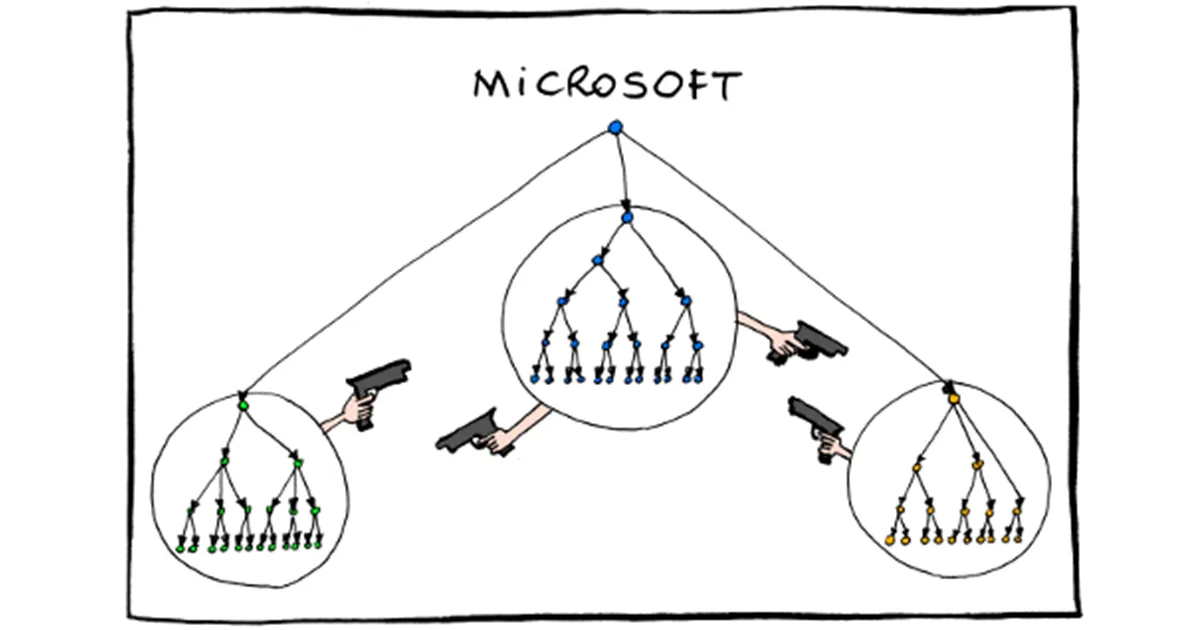
For GitHub to be worth as much as the labs, solving for the rest of the enterprise is imperative. The labs know they need to bring agents to the rest of the enterprise. That is their path to $1T. It is also GitHub’s path if they are up for it.
Now, agents building and modifying databases. How do you version control and test a database? Sorry. That’s not GitHub. We have that covered.
Conclusion#
GitHub $1T is a bit hyperbolic. But I got you to read my thesis, right? That’s a winning headline.
Seriously, my point here is two-fold. The labs might not be worth a trillion dollars each. GitHub is worth far more to Microsoft in the agentic era, mostly because of GitHub Actions. They both need to bring the success of coding agents to other domains to achieve their true potential.
We’d love to work with GitHub or anyone else to bring agentic coding success to databases and the applications they power. Interested? You know where to find me.