
Recently, we learned the Fashion Institute of Technology, also known as FIT, a public college in New York, uses Dolt extensively. Professor Calvin Williamson of the Science and Mathematics Department adopted Dolt for a number use cases this year. Dolt is used to create and host open financial data. Dolt is used to power financial apps used by the business department. Dolt is used to teach databases and artificial intelligence to students.
We originally noticed a number of DoltHub user sign ups from Fashion Institute of Technology email addresses in June 2025. Then, Calvin responded to one of my weekly emails and gave me the details of his use cases. Here is the story.

The Use Cases#
Professor Calvin Williamson is a fan of Dolt. In 2025, he adopted Dolt at FIT for three use cases.
Open Data#
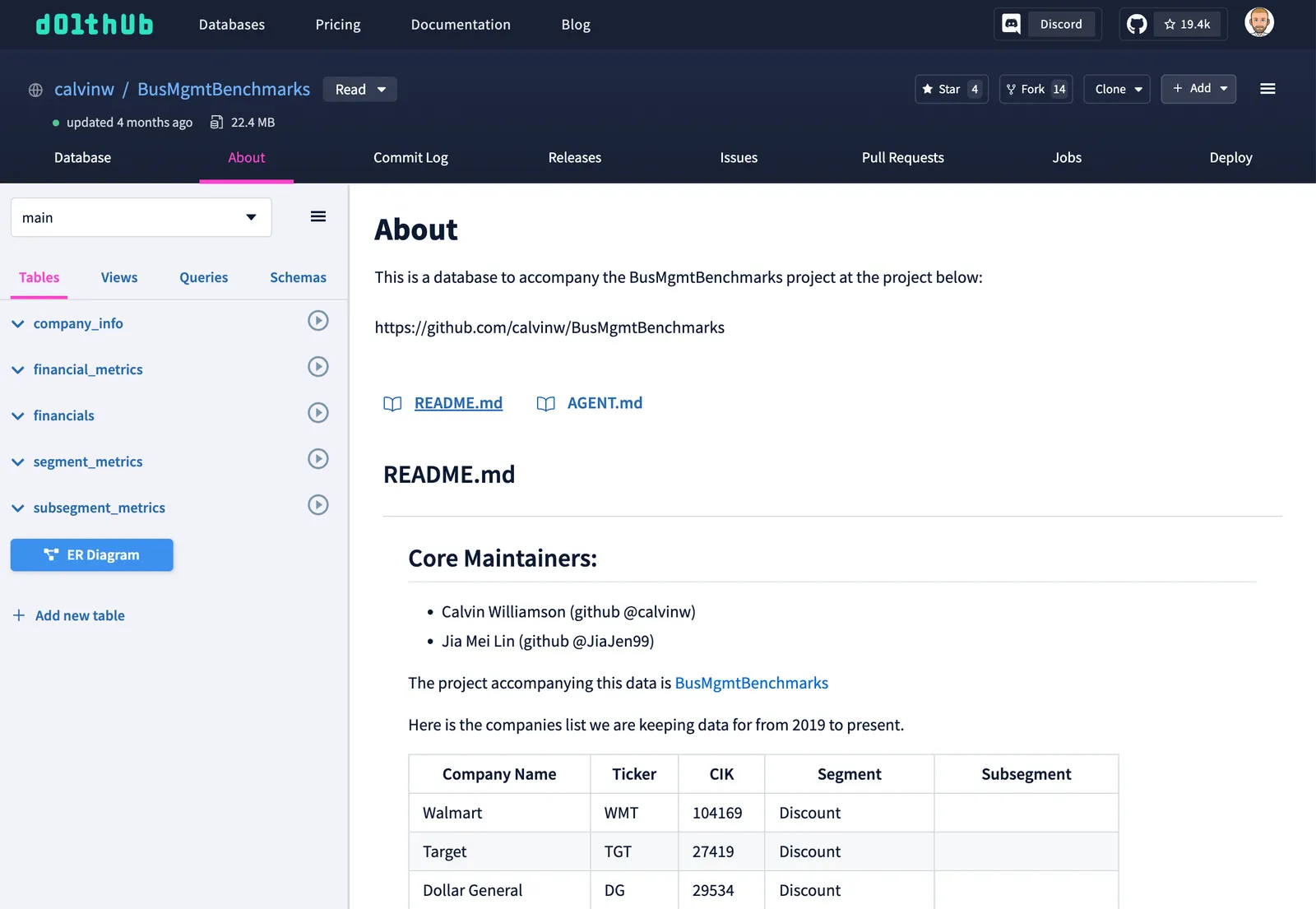
Dolt was initially conceived as a data sharing tool. It’s always nice to hear of users adopting Dolt for its original use case. Calvin adopted Dolt to create and store an open-source, standardized financial data set for use in classes. He leveraged State University of New York (SUNY) grants to get the data sets created and maintained.
The data set, called BusMgmtBenchmarks, is available on DoltHub. The database “collects retail data for a number of companies and segments”. It’s a free and open collection of financial data for retail business.
Powering Apps#
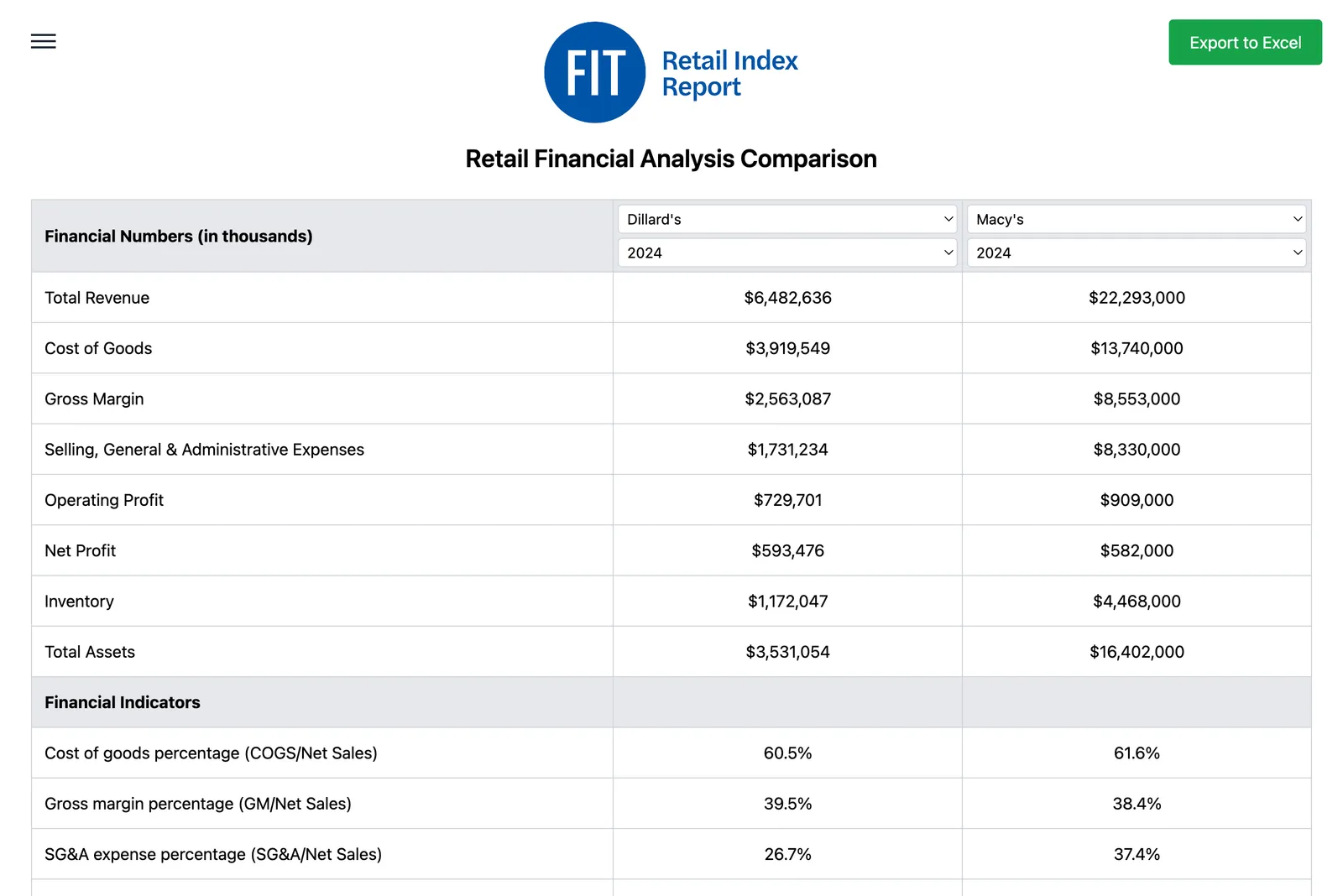
Dolt later evolved into a full fledged Online Transaction Processing (OLTP) database you can use to power applications. FIT also leverages this capability. Dolt powers apps that use the open Dolt database above. It is used in classes at FIT in the Business departments. These apps were built at FIT by faculty and students. An example web dashboard is seen here below.
Teaching AI#
Dolt is used in the AI Large Language Models (LLMs) class to teach databases and AI. Students are asked to have Gemini write CREATE TABLE and INSERT statements to solve a defined business problem. Students then create a new database in DoltHub after getting an account there. They use DoltHub’s import functionality to run the SQL Gemini created. The students then use MistralAI to hook up to a custom DoltHub Model Context Protocol (MCP) server Calvin created last year.
Finally, students run analysis on the databases in the MistralAI chat.
Version control is a critical part of the teaching in this class. Calvin calls it “Making the LLM work on a branch for safety”. Students get it. The class works through many examples of agentically creating a database and then making branches to make any changes to the database, especially changes that were coming from an LLM.
Students are very excited about this use case. Calvin reports “students actually recommended spending more time with database data science in that course” after working with Dolt. In Calvin’s words, “Non-coders building an AI enabled database! They are so thrilled to do it.”
Why Dolt?#
Calvin provided this useful summary about why he is so excited about Dolt. I removed some extraneous exclamation points for brevity.
I also tell other academics that the combination of:
- Github pages front end
- Serverless REST api to a Dolt database
- The ability to online edit an open source Dolt database
is a dream for open-source data science. It’s a killer combination if you ask me! And with branches you say! Wow.
Open Source#
FIT is a proud supporter of open source, preferring open-source tools in the classroom over paid options. Dolt is free and open-source. DoltHub is free for public databases. This combination means that students get world class, cutting edge software at zero cost. Moreover, the SUNY grants were dependent on using open-source technology making Dolt a perfect fit.
Web User Interface#
DoltHub’s web interface provides a powerful online workbench for Dolt databases. Calvin uses DoltHub to make databases more accessible to non-technical students. Calvin seems to be a heavy DoltHub user with most of his public repositories being sample databases he’s created for his teaching.
REST API#
Every database on DoltHub can be read and edited via DoltHub’s REST API. This API is intended for low-scale use. Calvin uses DoltHub’s REST API to expose an MCP Server that Large Language Models can use to access Dolt databases.
Version Control#
As noted above, version control is a critical piece of teaching students how to have LLMs safely modify databases. The world is starting to realize that AI needs version control to operate safely and effectively. Calvin is teaching the next generation of AI practitioners how to safely use AI with databases using Dolt.
Conclusion#
Calvin intends to expand FIT’s use of Dolt.
We will probably be running more and more sections of our courses too. LLM data science is well suited to FIT Students since they are not programmers or CS types. But they love agentic coding!
The business students really do appreciate some exposure to databases with LLMs, because it makes them look very skilled in AI…Even the fashion design and art students like it as well.
But dolt is so easy to set up online like that…its great…its a great product.
Needless to say, I agree. Inspired to use Dolt at your academic institution? Come by our Discord and let’s chat.